One scope, not six quotes
Cabling, network, phones, cameras, doors, and rooms get designed together, so nothing falls into the gap between two contracts.

New office technology · Northern Virginia & the DMV
Cabling, Wi‑Fi, phones, cameras, door access, meeting rooms, and email—scoped together, installed on one schedule, and tested before your staff arrive. One contractor, one quote, one number to call.
Why buildouts go sideways
The cabler, the phone guy, the AV shop, and the alarm company usually meet each other for the first time on site. Everything below exists so that never happens on your job.
Cabling, network, phones, cameras, doors, and rooms get designed together, so nothing falls into the gap between two contracts.
Cable goes in while the walls are open and the rest lands on the punch list. Your GC gets dates, not a vendor to chase.
Staff walk into working Wi‑Fi, phones that ring, printers that print, and a meeting room they can use—not a week of "we are still setting up."
The team that built it supports it. Nobody hands you a binder and disappears.
What we handle
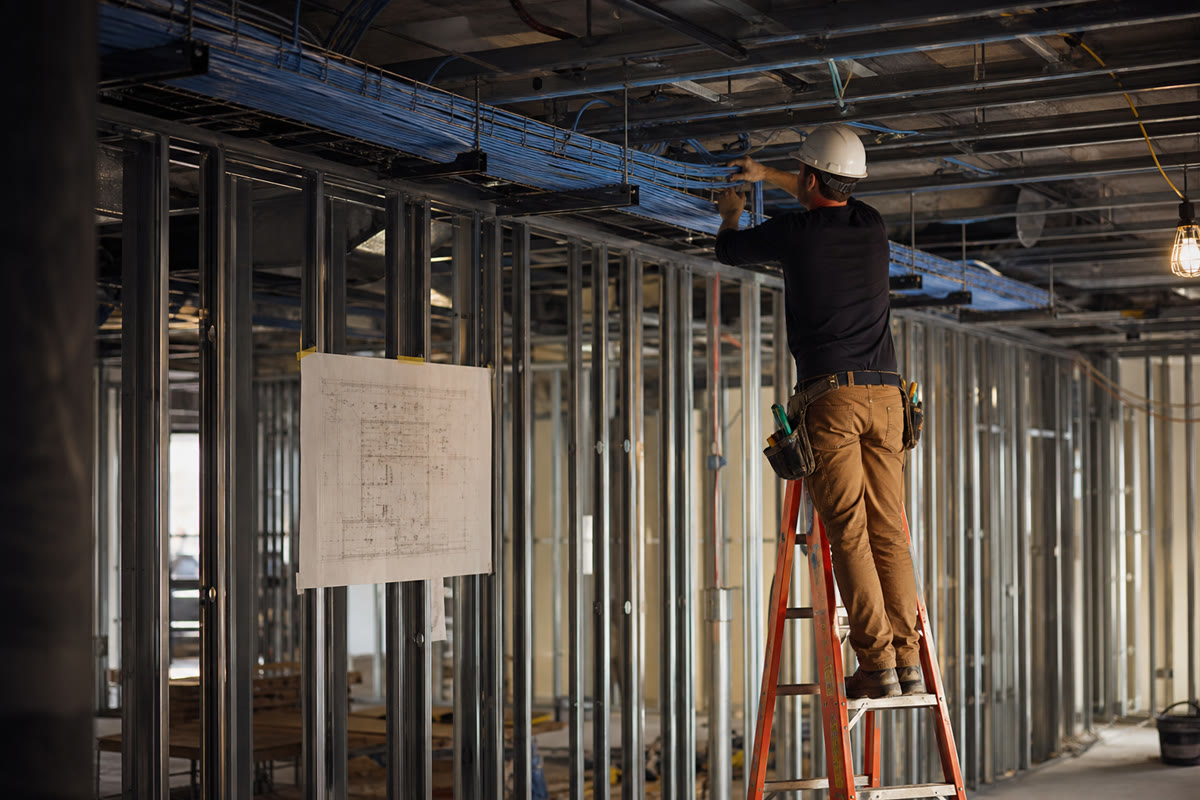
Cable, power, and the rack planned and pulled while the ceiling is still open—far cheaper than cutting drywall in month two.
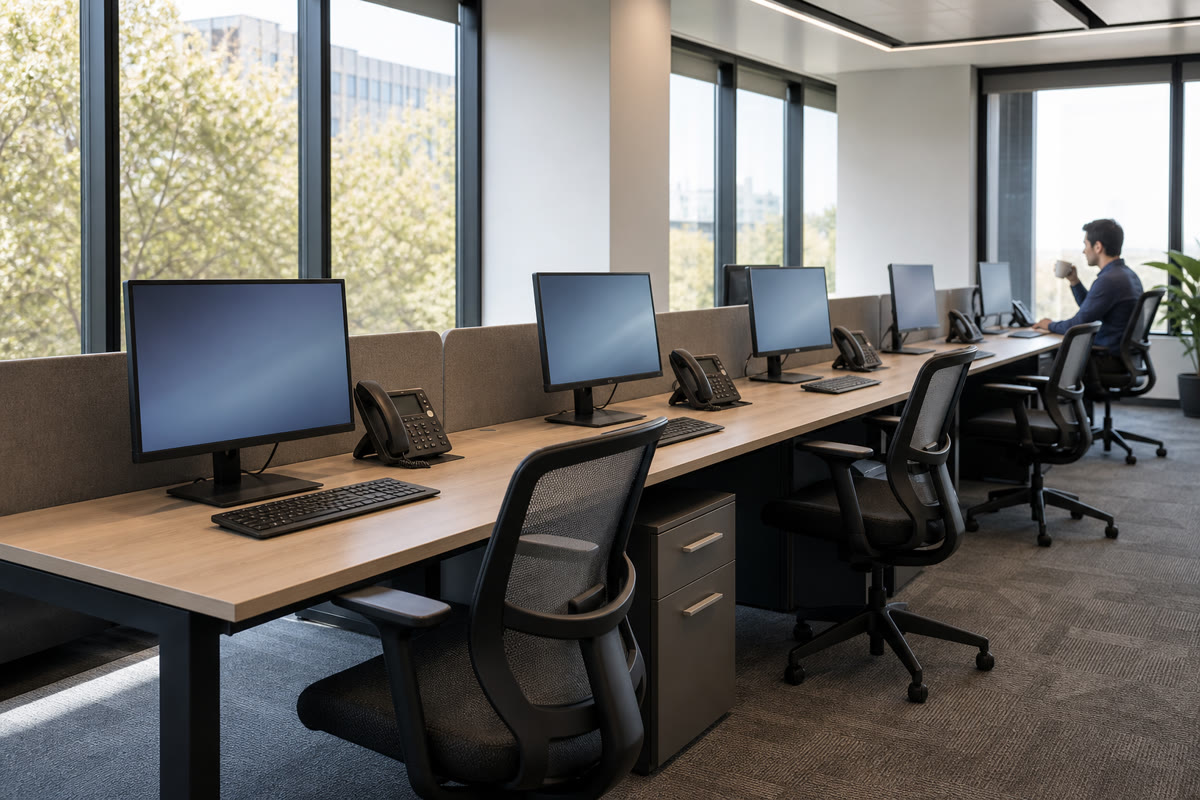
Wi‑Fi, wired drops, printers, phones, and email all live and tested before anyone unpacks a box.
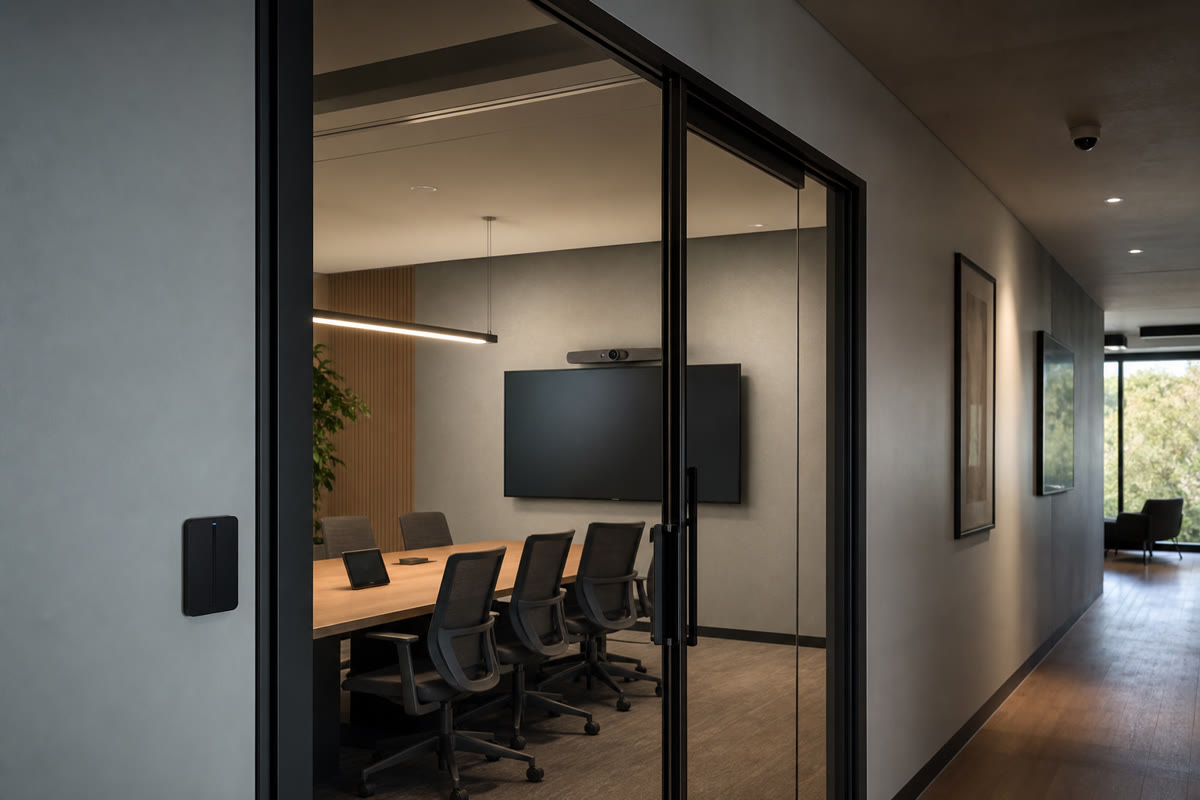
The meeting room, the badge readers, and the cameras go in as part of the same job instead of three separate projects next quarter.
The honest comparison
Buildouts rarely run late because of one bad trade. They run late because nobody was responsible for the seams between them.
Headcount, square footage, and how much of the scope you already have under contract move the number most—so we read the floor plan and quote the whole job as one price.
Included when you want it
Each of these is a finished, installed system on its own. In a buildout they arrive together, on one schedule and one quote.

Coverage designed off the floor plan while the ceiling is still open.
See the full solution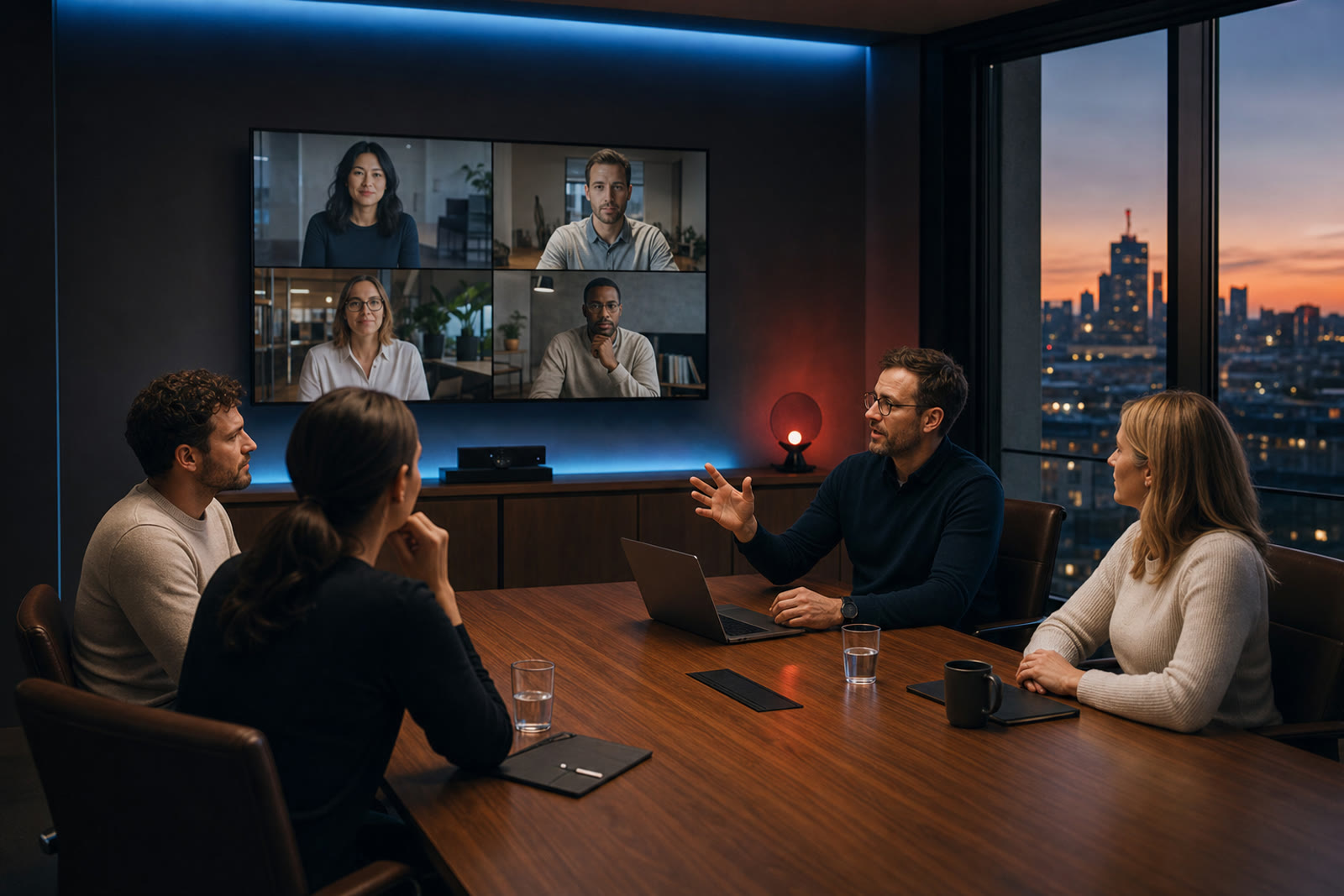
A meeting room your team plugs a laptop into, working the week you move in.
See the full solution
Coverage planned with the cable, so no camera needs a wall opened later.
See the full solution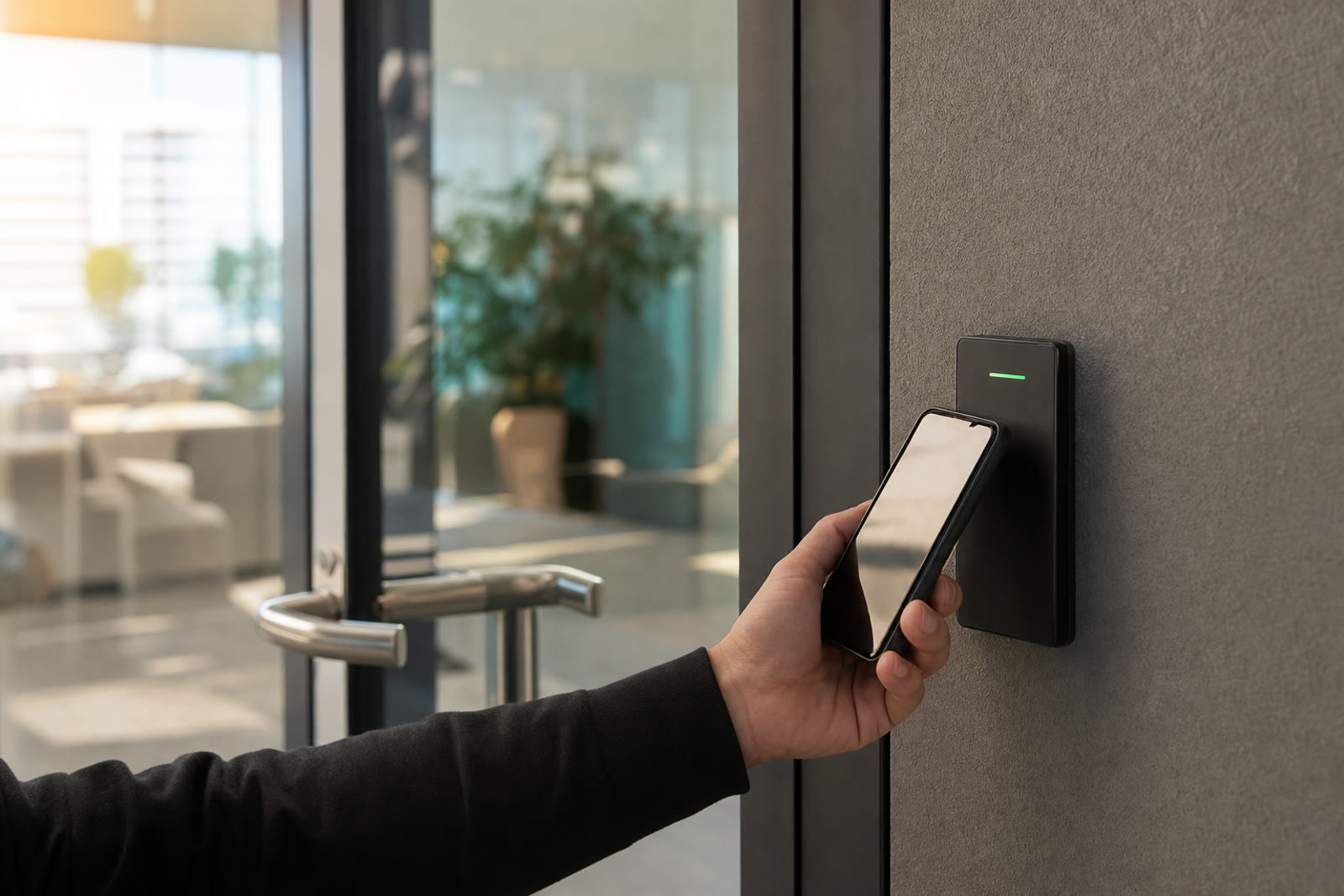
Badge readers wired during the buildout instead of retrofitted next year.
See the full solution
Numbers ported and ringing the right desk before anyone unpacks a box.
See the full solution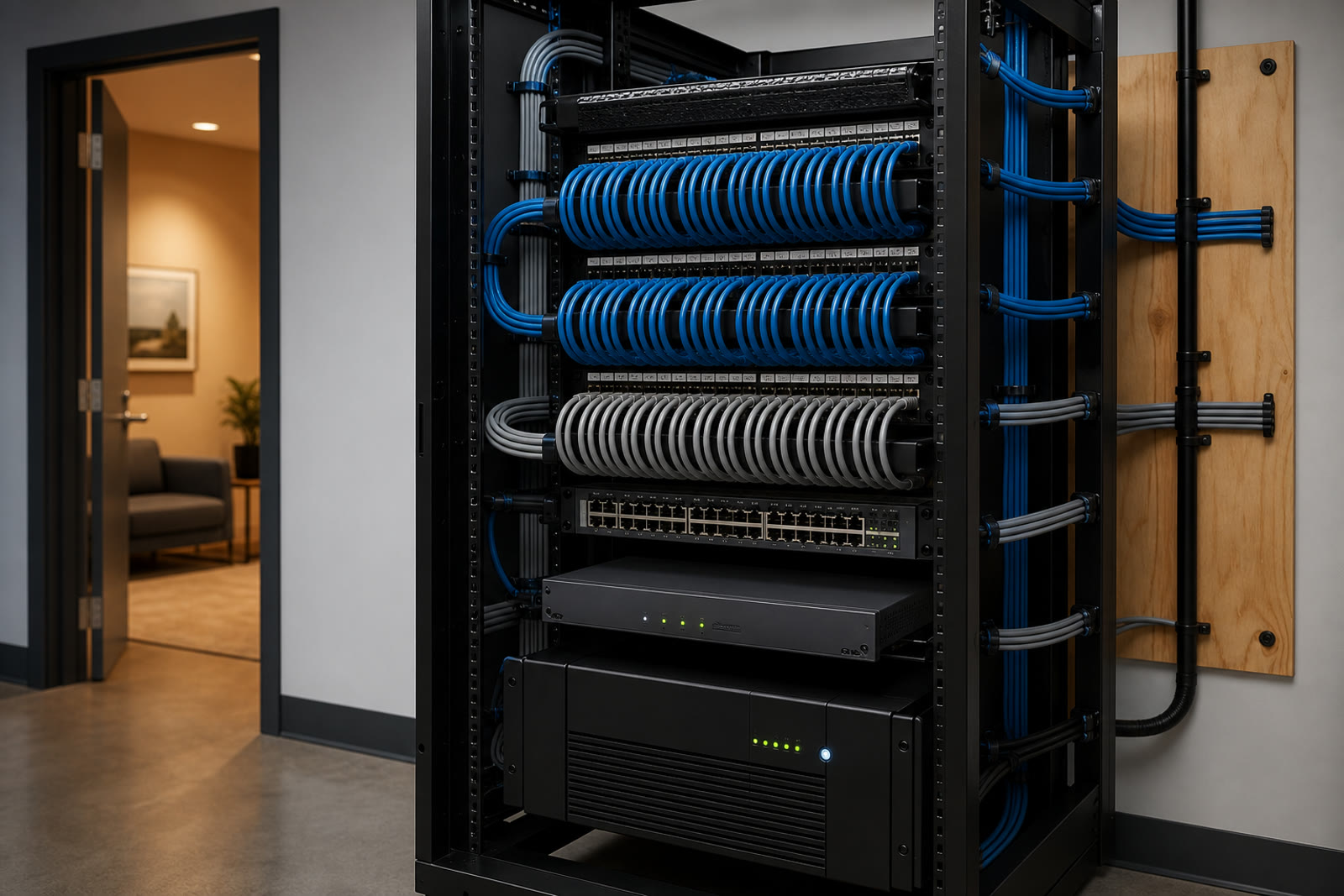
A rack built right the first time, so nobody inherits a rat’s nest in five years.
See the full solution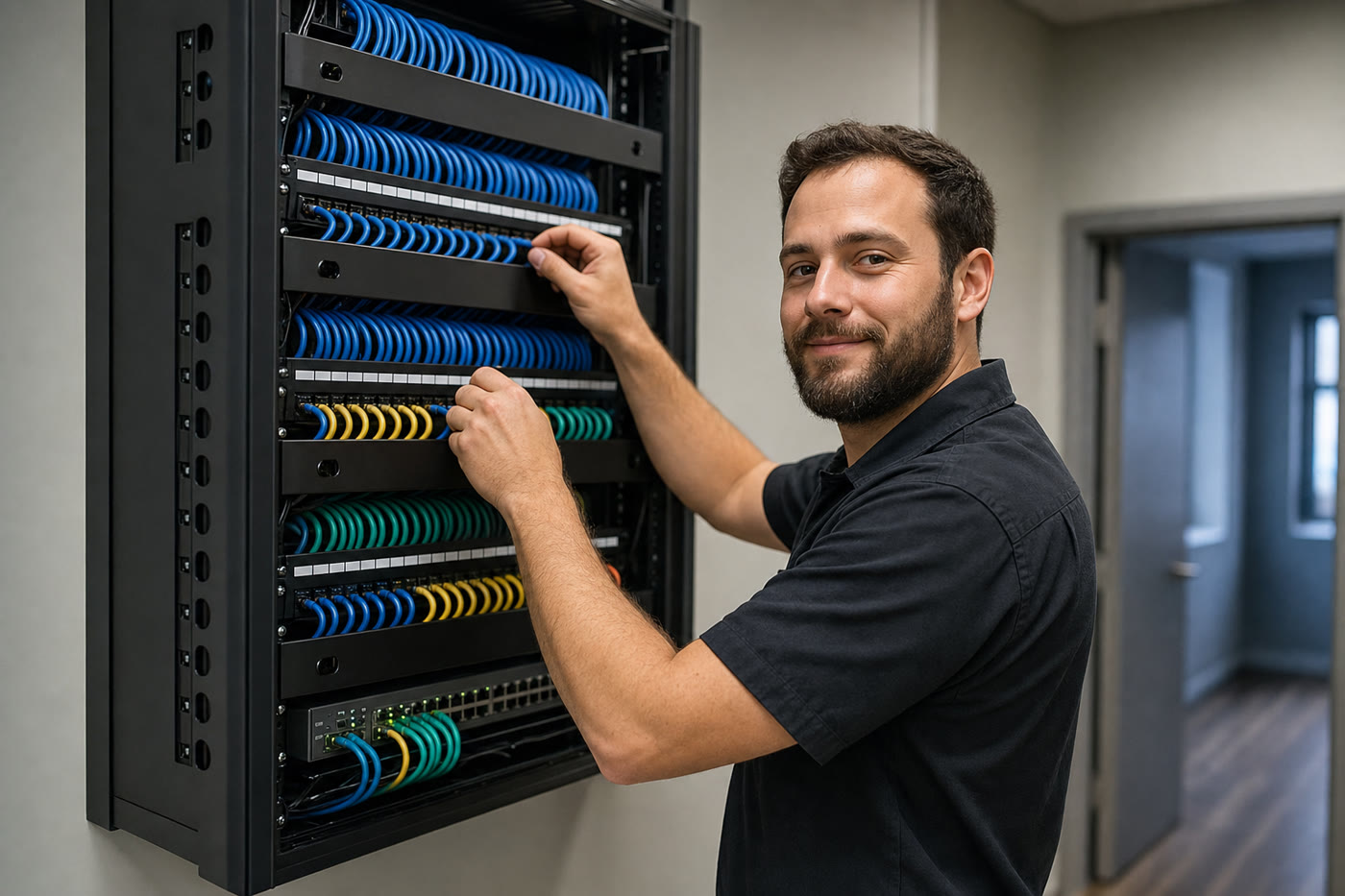
How it goes
Headcount, desks, rooms, doors, and where the carrier is bringing service into the building.
The whole technology scope in a single quote, phased to match the construction schedule.
Cable and rack while the walls are open, then network, phones, rooms, doors, and cameras as the space finishes.
On site the morning your team moves in, then supporting it from there.
As soon as you have a floor plan and a target date—before the walls close, ideally. The single most expensive mistake in a buildout is discovering you needed a cable run after the drywall is up and painted.
Yes, and we prefer to. We give your GC dates and requirements for the rough-in, then come back for the finish work. That is a normal trade relationship, not something they have to manage.
Cabling and the rack, network and Wi‑Fi, phones, email and accounts, workstations and printers, and—when you want them—meeting rooms, security cameras, and door access. You can take the whole scope or the parts you do not already have covered.
Headcount and square footage drive most of it, then how many rooms and doors are in scope. We read the floor plan and quote the whole technology side as one number, phased so you are not paying for the finish work during the rough-in.
Yes. Porting numbers is routine but slow, so we start it early—it is usually the longest lead item in the whole project and the one most likely to hold up a move date if nobody owns it.
It usually does. We phase our work against the actual site condition rather than a date on a spreadsheet, and we re-sequence when your GC does. Nobody shows up to pull cable into a room that is not framed yet.
Yes—that is the point of using one contractor. The people who designed and installed it are the people who answer the phone in month three, so nobody has to reverse-engineer someone else’s work.
We plan, install, and support the technology side of new offices, suites, clinics, and second locations throughout the greater DMV. Our office is at 13873 Park Center Rd, Suite 184, Herndon, VA 20171. From there we serve the greater DMV—Northern Virginia (Loudoun, Fairfax, Arlington, Prince William, and the rest of NoVA), Washington DC, and Maryland (Montgomery County, Prince George’s County, and up to Baltimore), plus Northern Virginia south to Fredericksburg. We are a Northern Virginia shop, not a statewide Virginia vendor covering Richmond or the rural parts of the state. Remote-first IT support everywhere we cover; local engineers for onsite surveys, installs, and projects.
Relocating rather than opening fresh? Same team, planned around the cutover instead of the buildout.
View Office moves & IT relocationCoverage is designed off the floor plan while the ceiling is still open, which is when it is cheapest to get right.
View Business Wi‑FiShare a few details about your space and what you're trying to accomplish—we'll follow up to schedule a walkthrough or a call.