Everything gets a label
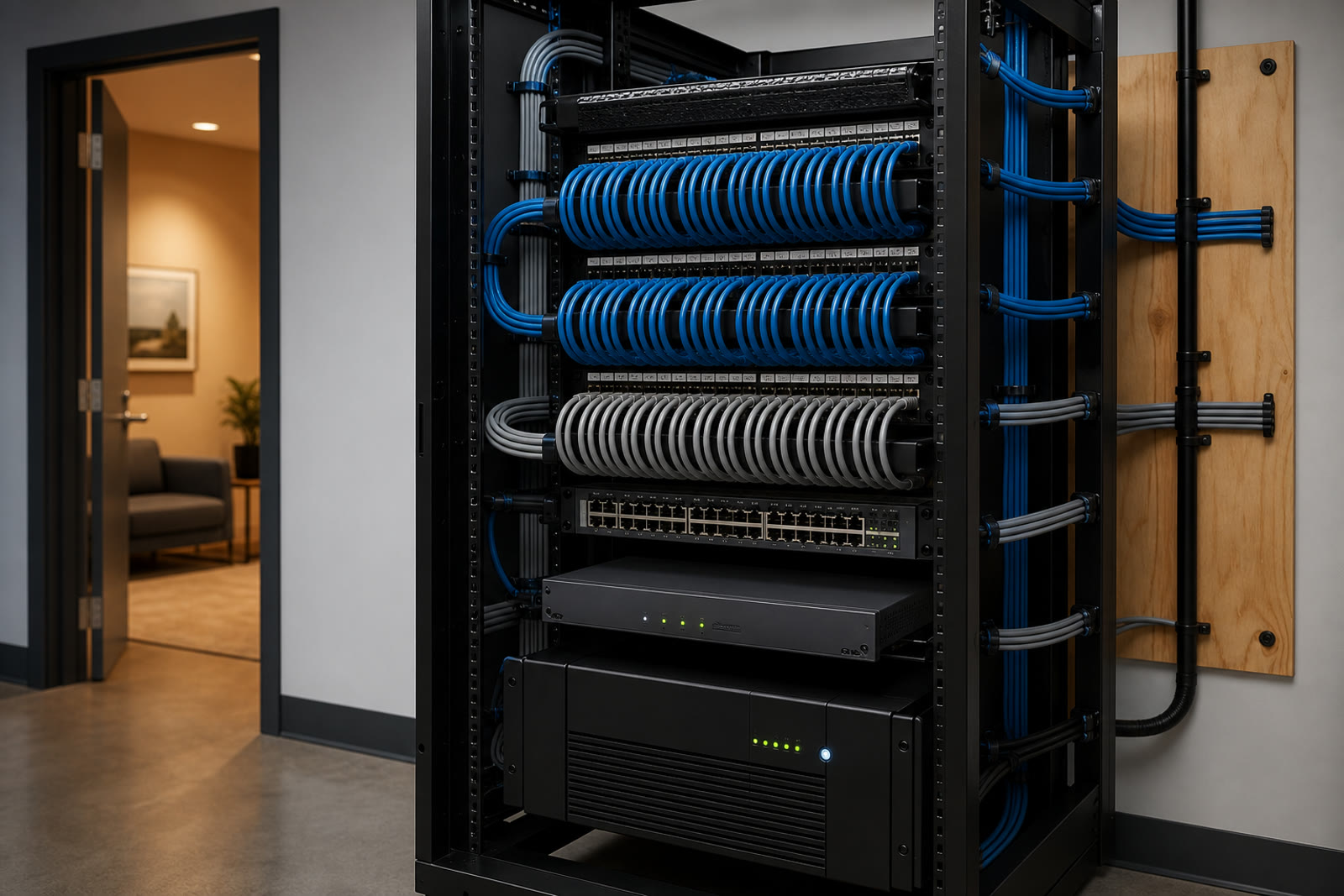
Both ends of every run, matched to a port on a patch panel and a spot on a floor plan. Tracing a cable becomes reading a label, not pulling on it and watching what moves.
Server room & rack refresh · Northern Virginia & the DMV
Somewhere in your suite is a shelf of tangled cable holding up the whole business, and nobody knows which one goes where. We rebuild it properly, label every run, and hand you a diagram so the next person is never guessing.
Why offices call us
One cable at a time, over years, by whoever was available. Then a switch port fails and an afternoon disappears because there is no way to tell which cable feeds the conference room.
Both ends of every run, matched to a port on a patch panel and a spot on a floor plan. Tracing a cable becomes reading a label, not pulling on it and watching what moves.
Equipment mounted, ventilated, and reachable, with cable managers doing the work instead of gravity and zip ties.
Battery backup sized for the gear that matters, so a two-second flicker stops taking your phones and internet down with it.
A diagram, a port map, and a photo set. Yours to hand to any electrician, contractor, or IT provider—including one that is not us.
What you actually get
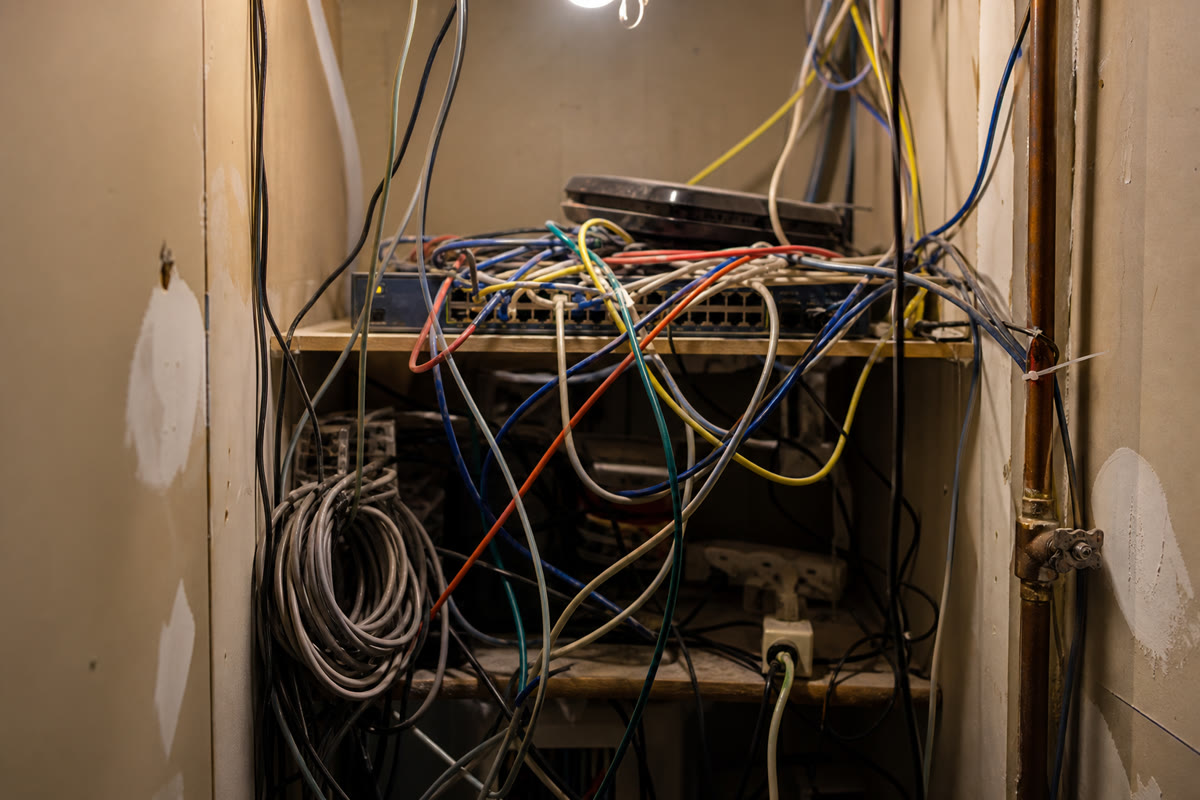
The shelf, the daisy-chained power strip, the coil of cable nobody dares cut. We photograph and trace it before anything is touched, so nothing goes dark unexpectedly.

Runs land on a patch panel, patch leads are cut to length and combed, and every port carries a label that matches the diagram you receive.
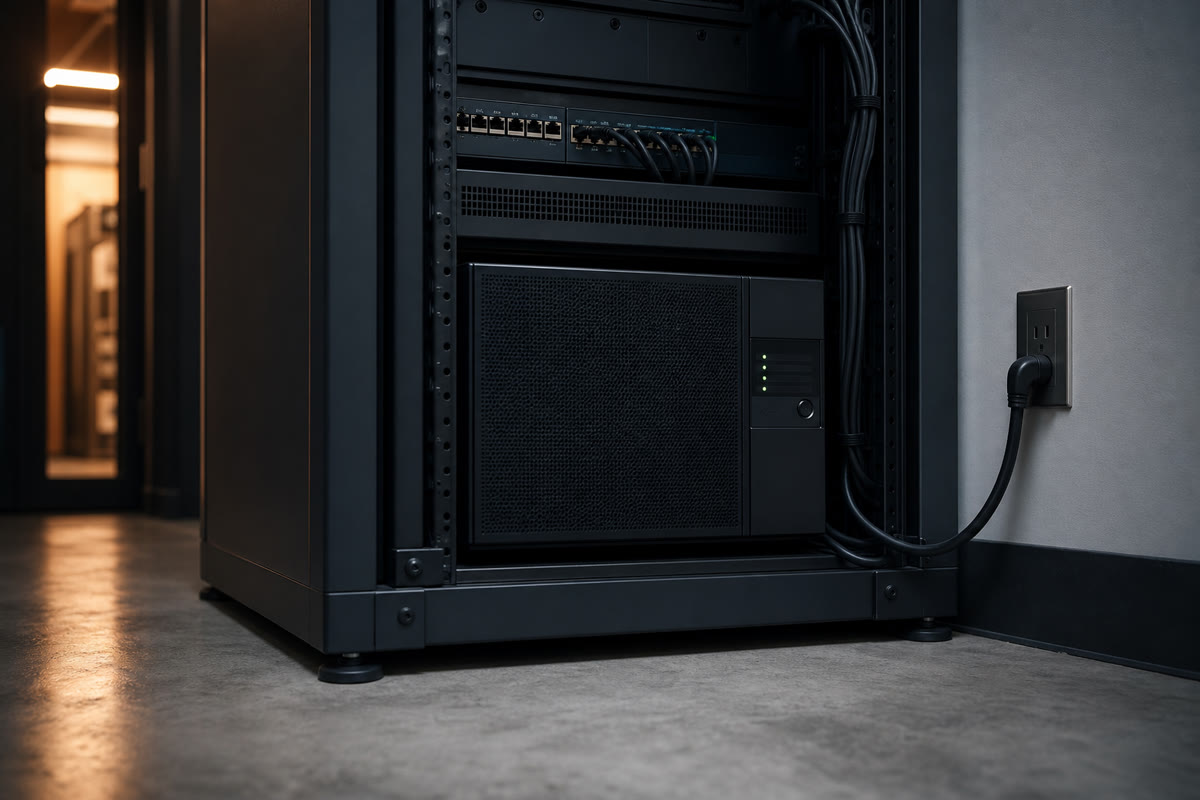
Switching with enough ports and enough power budget for the cameras, access points, and phones you already have—plus room for the ones coming.
The honest comparison
A rushed closet does not fail immediately. It fails on the afternoon you are trying to open a new office, hire someone, or find out why half the floor dropped.
Number of runs, whether the closet needs new terminations or just remediation, and how much has to happen after hours move the number most—so we walk the space and quote the whole job as one price.
How it goes
Photos, a rough trace, and a count of what actually terminates there. That visit is what makes the quote a real number instead of a range.
Rack, panels, terminations, switching, power, and labour in a single figure. Anything we recommend replacing is called out separately so you can say no to it.
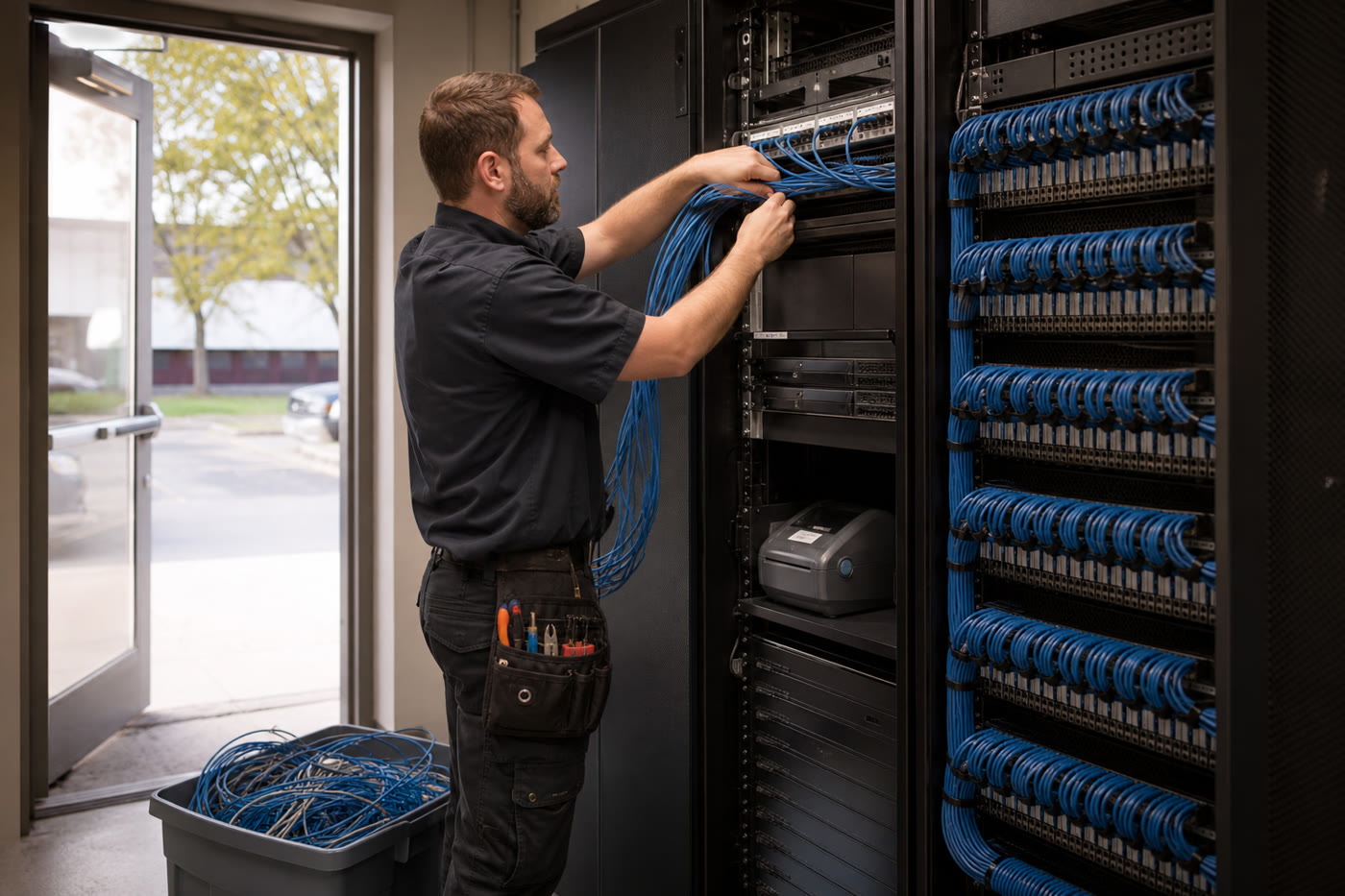
Usually after hours or over a weekend, cut over in stages so the office is not down. Old cable is removed rather than left coiled in the ceiling.
Port map, diagram, and photos, plus test results for every run. It stays yours whether or not we do anything else for you.
No. We stage the work so live services move over in pieces, and the genuinely disruptive part happens after hours or over a weekend. That is quoted in from the start rather than added later.
It is driven by how many cable runs terminate there, whether they need re-terminating onto a new panel, and what equipment is being replaced. A small suite with a couple of dozen drops is a one-day job. A multi-floor space with several closets is scoped room by room. We walk it before quoting so the figure is real.
Only where it is warranted. If your switching is sound we will re-rack it and leave it, and we say so during the walkthrough. Where it does need replacing it is usually because the port count or power budget is already exhausted by phones, cameras, and access points.
Yes—that is most of this work. We test what is there, re-terminate what is salvageable, and tell you plainly which runs are damaged or too short to reuse rather than quietly patching around them.
A labeled patch field, a port map tying every jack to a location, a simple network diagram, photos of the finished closet, and test results for the runs. All of it is yours to keep regardless of who supports you afterwards.
For the gateway, the switch, and anything carrying phones, yes. Brief power dips are common and they take your internet and phones down for several minutes each time while equipment reboots. A modest unit removes that entirely.
Most single-closet jobs are one long day, sometimes split across an evening and a Saturday morning. We tell you the window during the walkthrough and we do not start until you have agreed to it.
We rebuild network closets, IDF and MDF rooms, and equipment racks for offices, clinics, retail, and light industrial spaces throughout the greater DMV. Our office is at 13873 Park Center Rd, Suite 184, Herndon, VA 20171. From there we serve the greater DMV—Northern Virginia (Loudoun, Fairfax, Arlington, Prince William, and the rest of NoVA), Washington DC, and Maryland (Montgomery County, Prince George’s County, and up to Baltimore), plus Northern Virginia south to Fredericksburg. We are a Northern Virginia shop, not a statewide Virginia vendor covering Richmond or the rural parts of the state. Remote-first IT support everywhere we cover; local engineers for onsite surveys, installs, and projects.
New drops, fibre between suites, and the broader cabling picture beyond the closet itself.
View Structured cabling & Wi‑FiMost closet cleanups end the same way: someone should be watching this. That is what this covers.
View Managed IT & help deskShare a few details about your space and what you're trying to accomplish—we'll follow up to schedule a walkthrough or a call.